
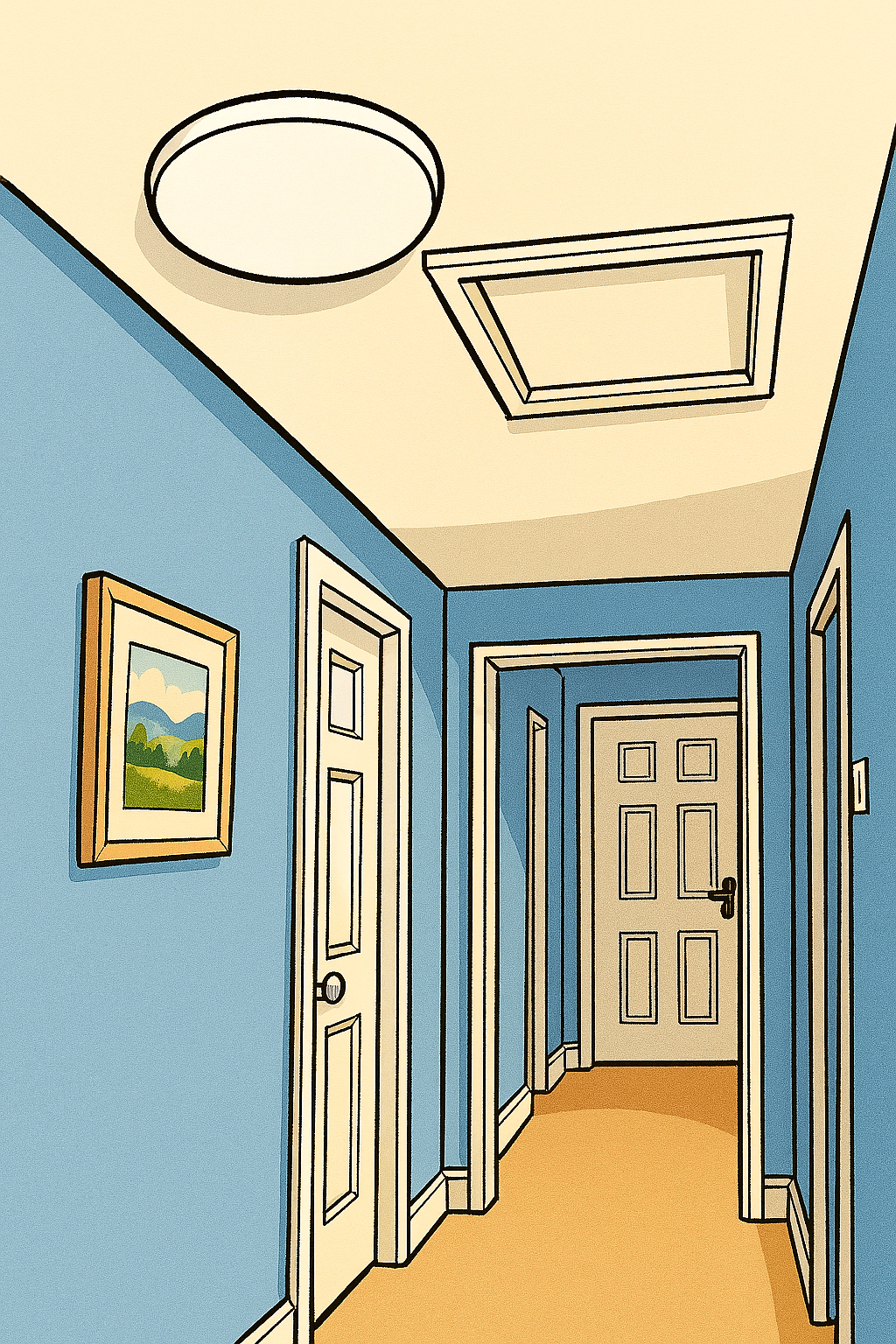
A heated Positive Input Ventilation (PIV) system is designed to improve indoor air quality, reduce condensation, and prevent damp.
PIV systems work by introducing fresh, filtered air from the loft or outside into the home, creating a slightly higher internal air pressure.
This positive pressure pushes stale, humid air out through natural leakage points such as vents, airbricks, and small gaps in the building fabric.
This continual displacement of moist air is highly effective for reducing condensation, dampness, and mould.
A heated PIV unit includes a low‑energy heating element that warms the incoming air before it enters your living spaces, improving comfort—especially in colder months.
Why heating matters:
- Prevents cold draughts from the ceiling diffuser.
- Improves comfort, particularly in cooler or poorly insulated homes.
- Helps maintain more even temperature distribution throughout the home.
- Reduces risk of internal condensation within the unit, improving longevity.
The heating activates automatically based on temperature, so energy consumption stays relatively low.
Most units are installed in the loft, where air is typically cleaner and less affected by ground‑level pollutants.
Fresh air is drawn from either:
- the loft space, or
- a dedicated roof vent connected via ducting.
The air is then:
- Filtered (to remove particulates, allergens, VOCs).
- Gently warmed (in heated models).
- Distributed into the home via a central ceiling diffuser, typically on a landing or hallway.
Once the warmed, filtered air enters the property:
- It spreads out through hallways and into rooms.
- The continuous supply creates a slight positive pressure.
- This encourages moist, stale, or polluted indoor air to migrate outward through:
- trickle vents
- wall vents
- gaps in floors, walls, and window frames
The result is fresher, drier indoor air and significantly reduced condensation and mould growth.